Rare formations · feature
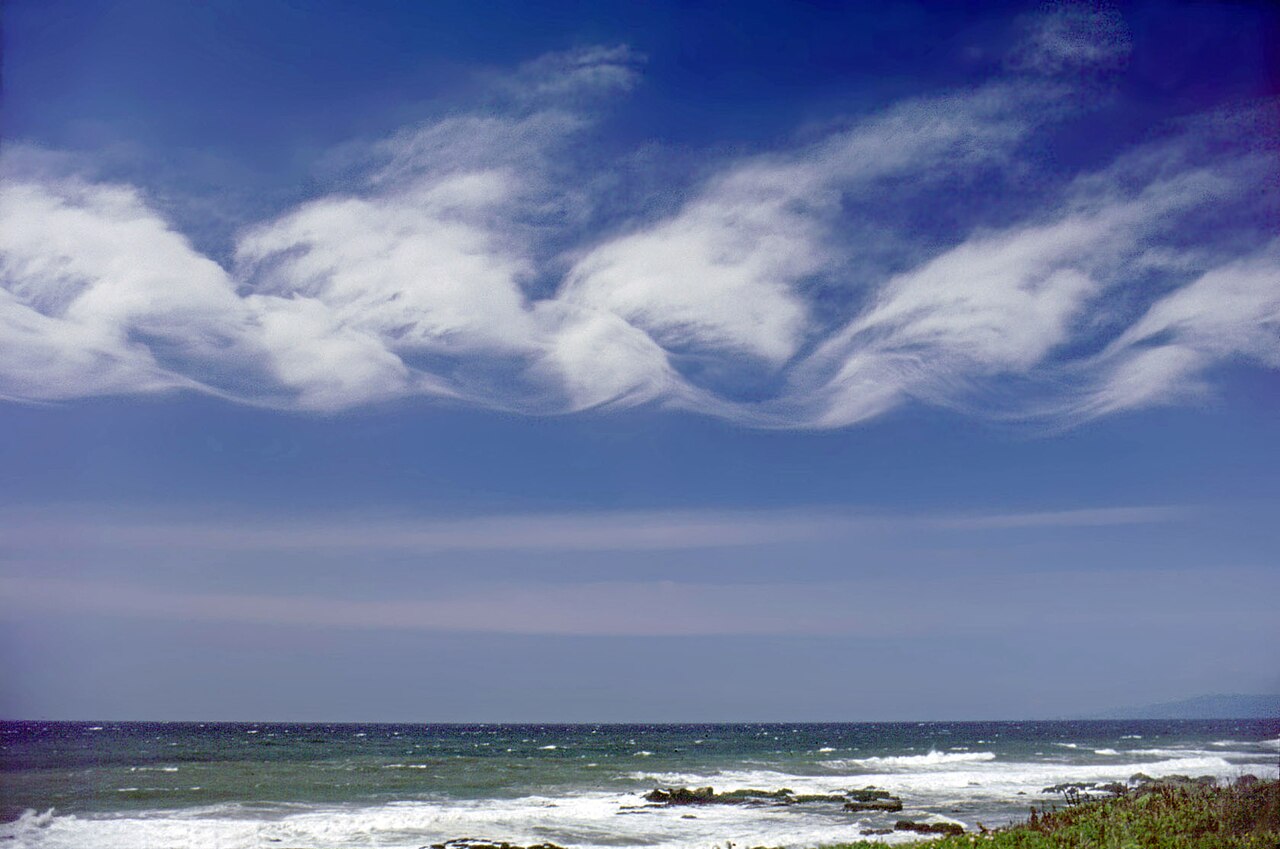
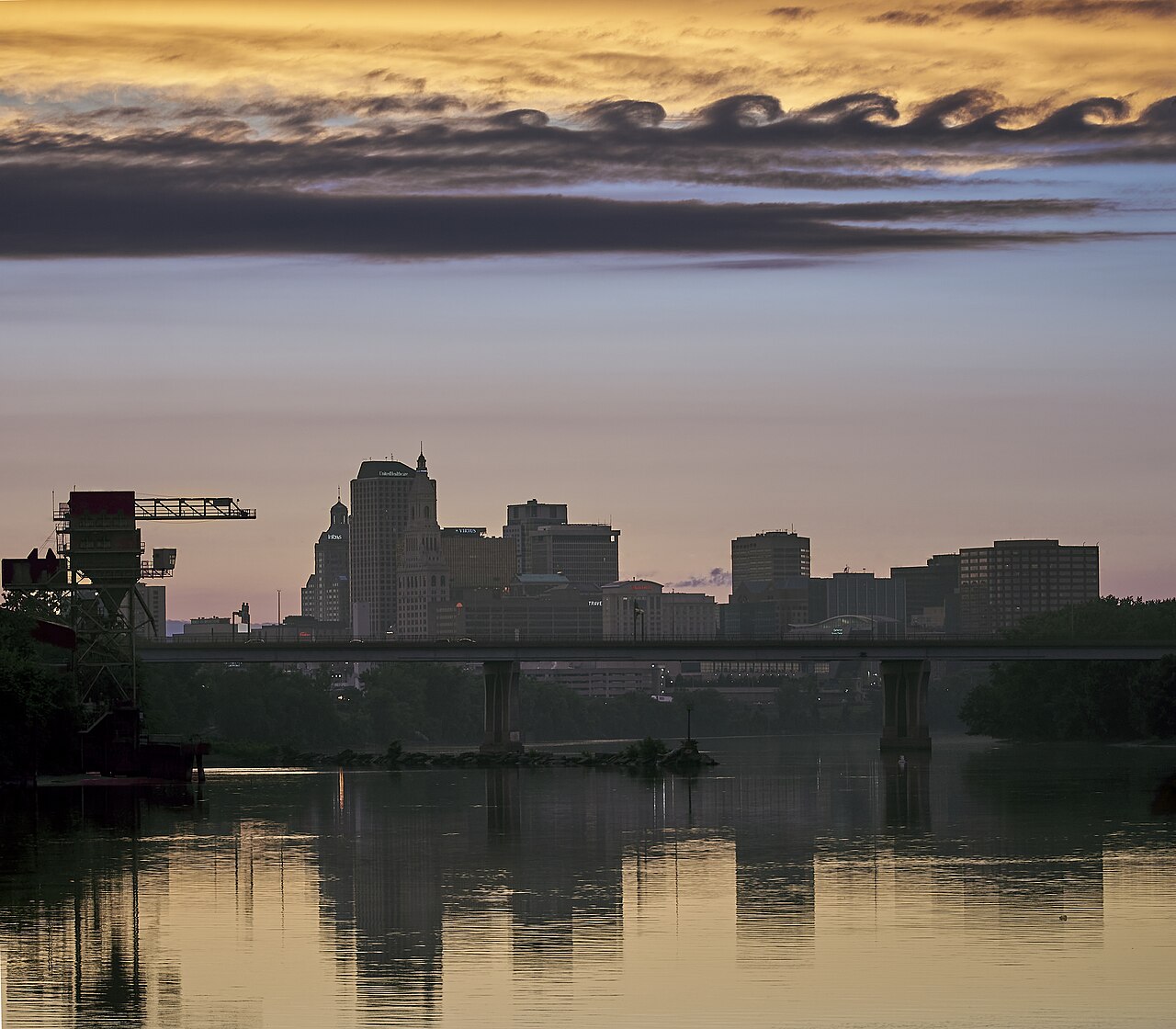
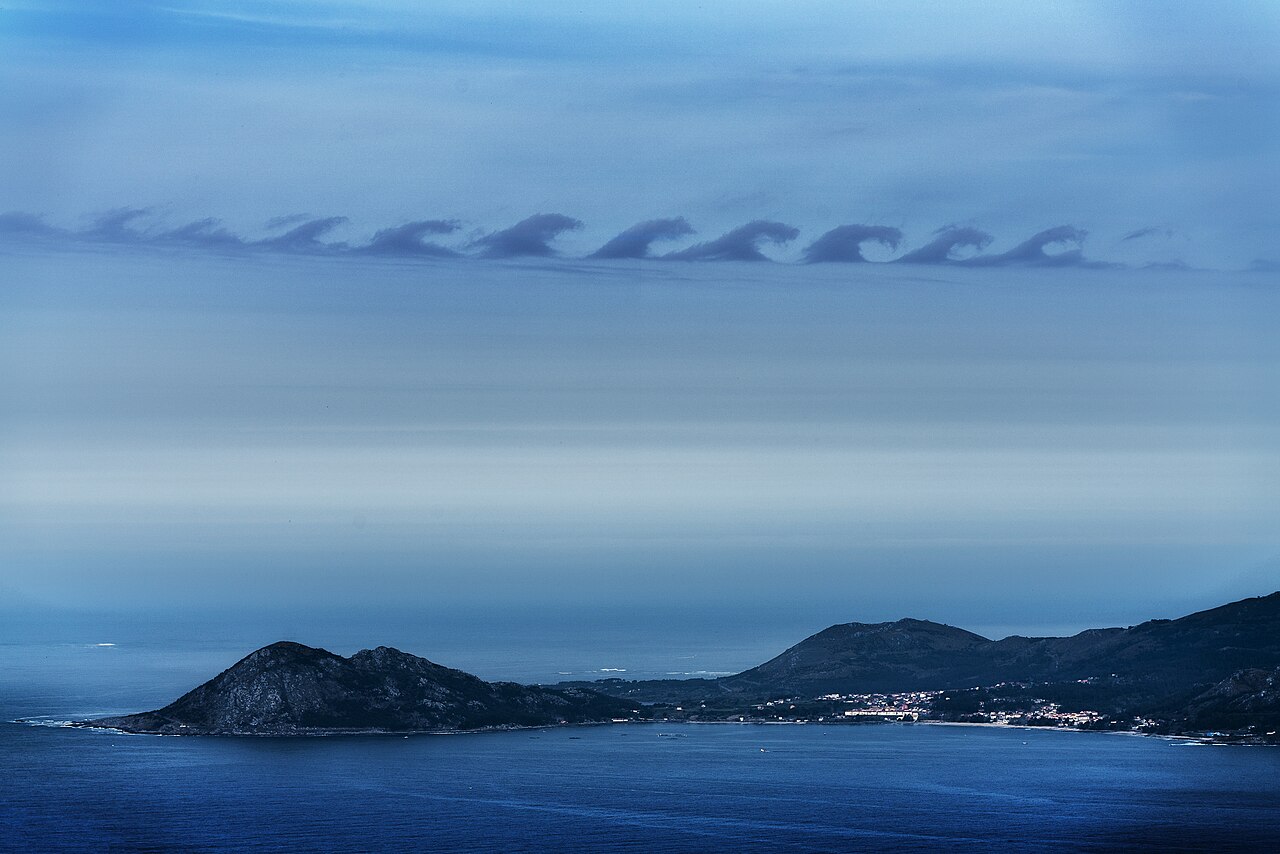
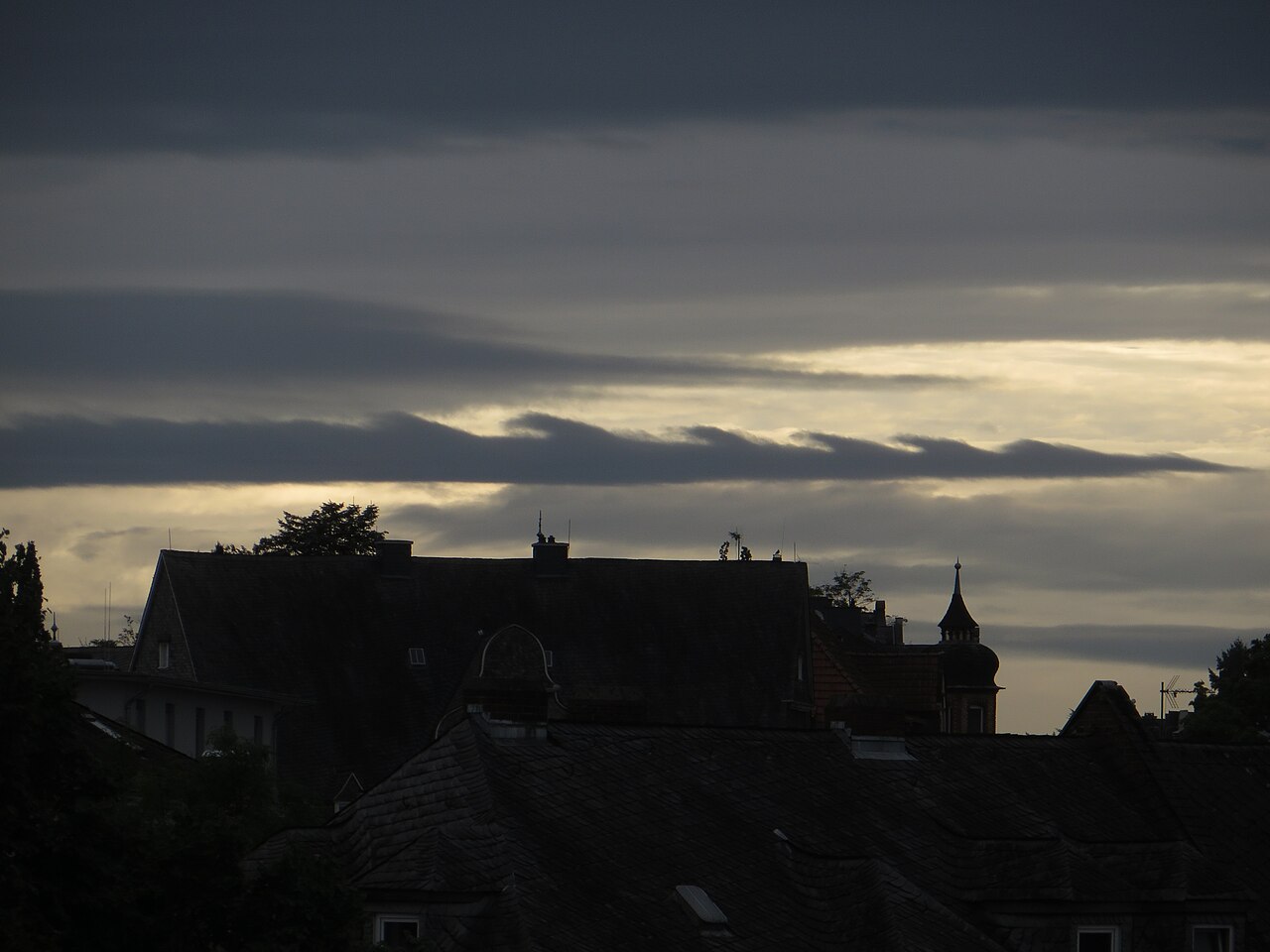
Kelvin-Helmholtz clouds
Waves breaking in thin air

Full credit
Own work
Displayed at reduced resolution. See the original file for full licensing information.

Full credit
https://www.flickr.com/photos/184781347@N05/52179262441/
Displayed at reduced resolution. See the original file for full licensing information.
.jpg)
Full credit
Nubes de Kelvin-Helmholtz / Kelvin-Helmholtz Clouds
Displayed at reduced resolution. See the original file for full licensing information.

Full credit
Own work
Displayed at reduced resolution. See the original file for full licensing information.
Swipe or scroll sideways to explore the photographs. Photos may include other cloud types; names and credits come from their source records.
Spot it
A short series of curls that resemble breaking ocean waves.
How it forms
Wind shear between adjacent air layers can roll their boundary into billows.
Read the sky
These curls reveal shear and can indicate turbulence aloft.
Where to look
Look along cloud edges where neighboring air layers move differently.
Little sky facts
Reveal fact 1
The formal feature name is fluctus.
Reveal fact 2
The curls often occur in a brief sequence.
Reveal fact 3
They may appear at different heights.
Reveal fact 4
The instability is not exclusive to the atmosphere.
Try this
Sketch a repeating row of curling wave tops.
Draw your own cloud ↗Read a little deeper
Met Office · formation and weather
Conditions described here are places to look, not a global frequency ranking. Use local weather forecasts and warnings for decisions. Never look directly at the Sun.