Everyday skies · genus
Cirrus
Ice written in the wind

Full credit
Own work
Displayed at reduced resolution. See the original file for full licensing information.

Full credit
Own work of user PiccoloNamek at the English language Wikipedia
Displayed at reduced resolution. See the original file for full licensing information.

Full credit
Own work
Displayed at reduced resolution. See the original file for full licensing information.

Full credit
Own work
Displayed at reduced resolution. See the original file for full licensing information.
Swipe or scroll sideways to explore the photographs. Photos may include other cloud types; names and credits come from their source records.
Spot it
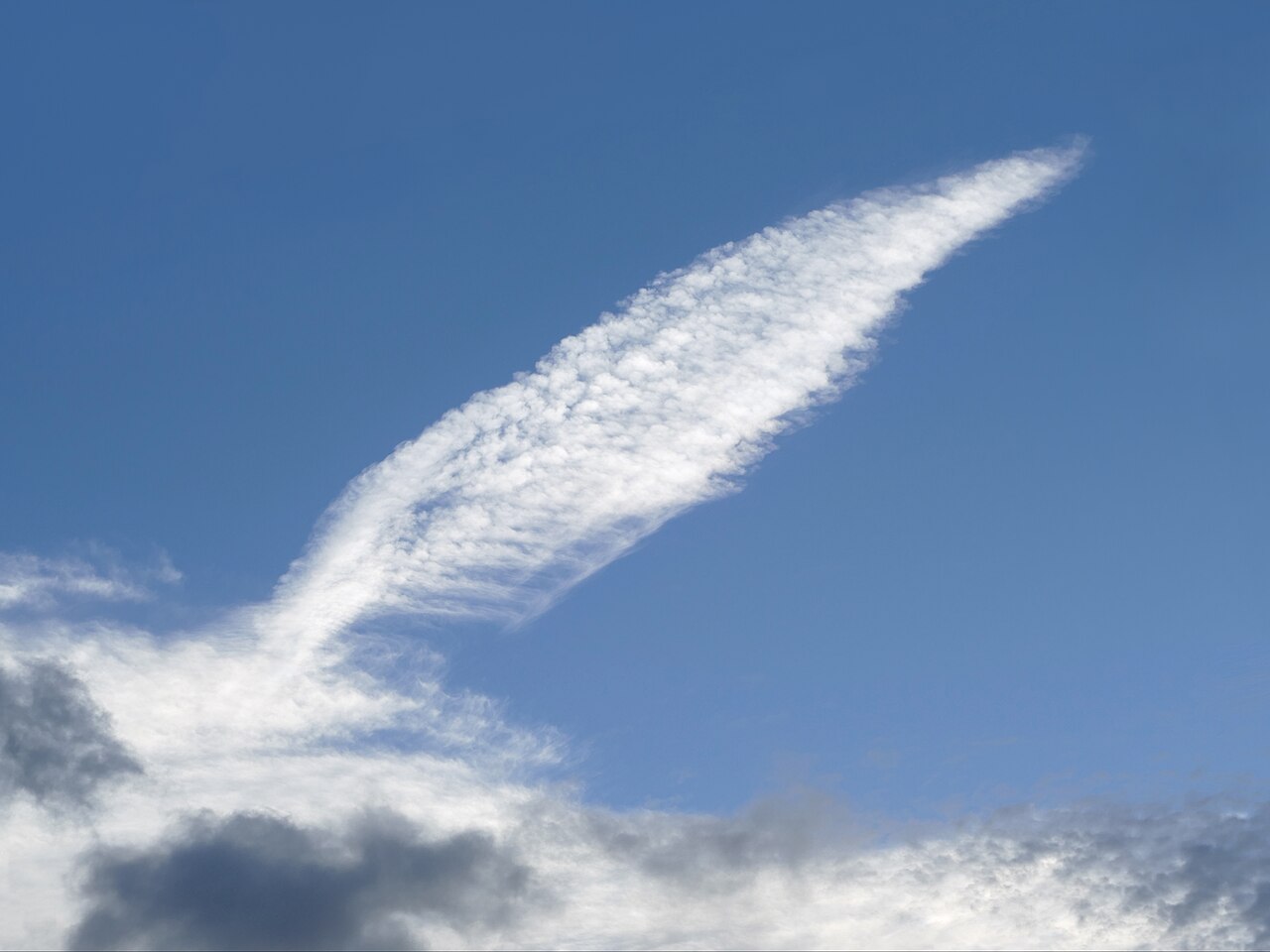
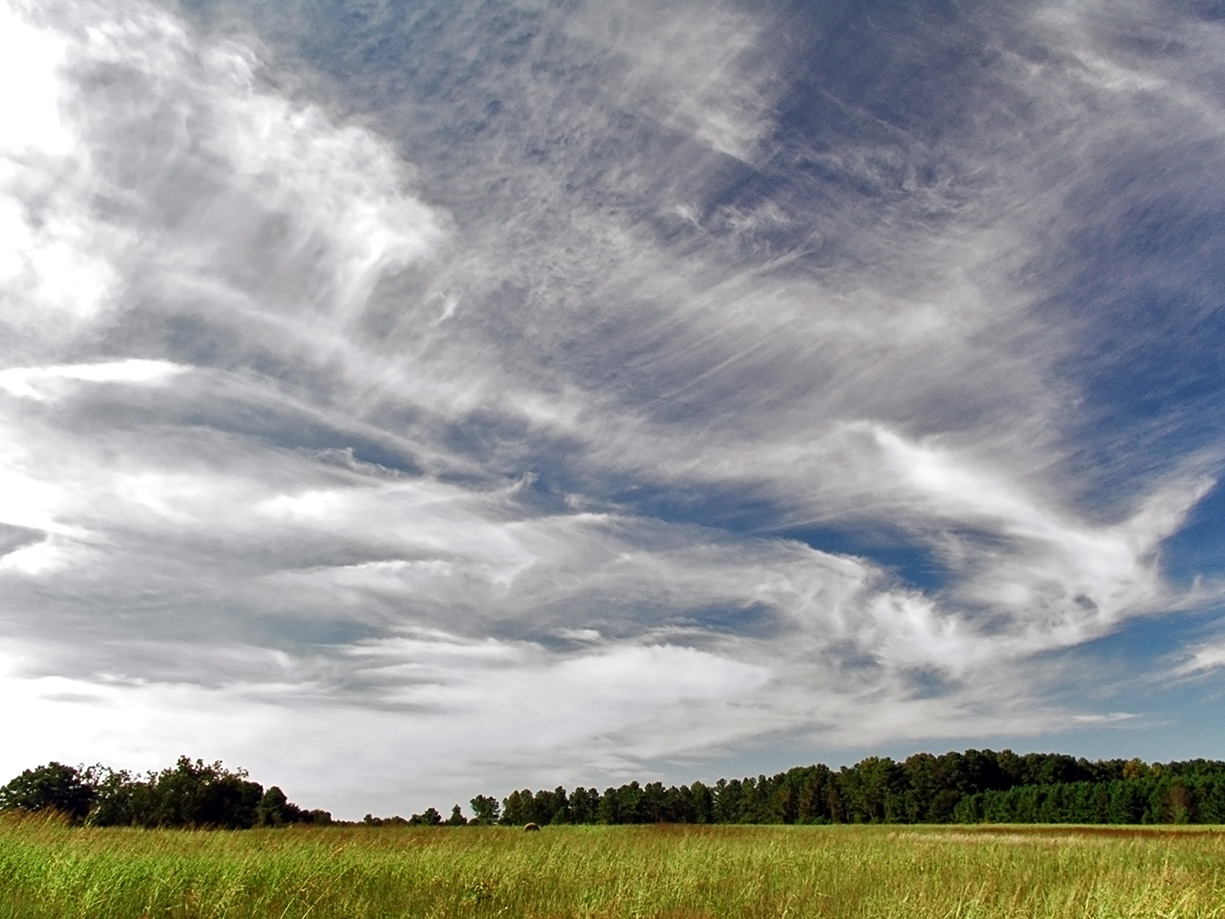
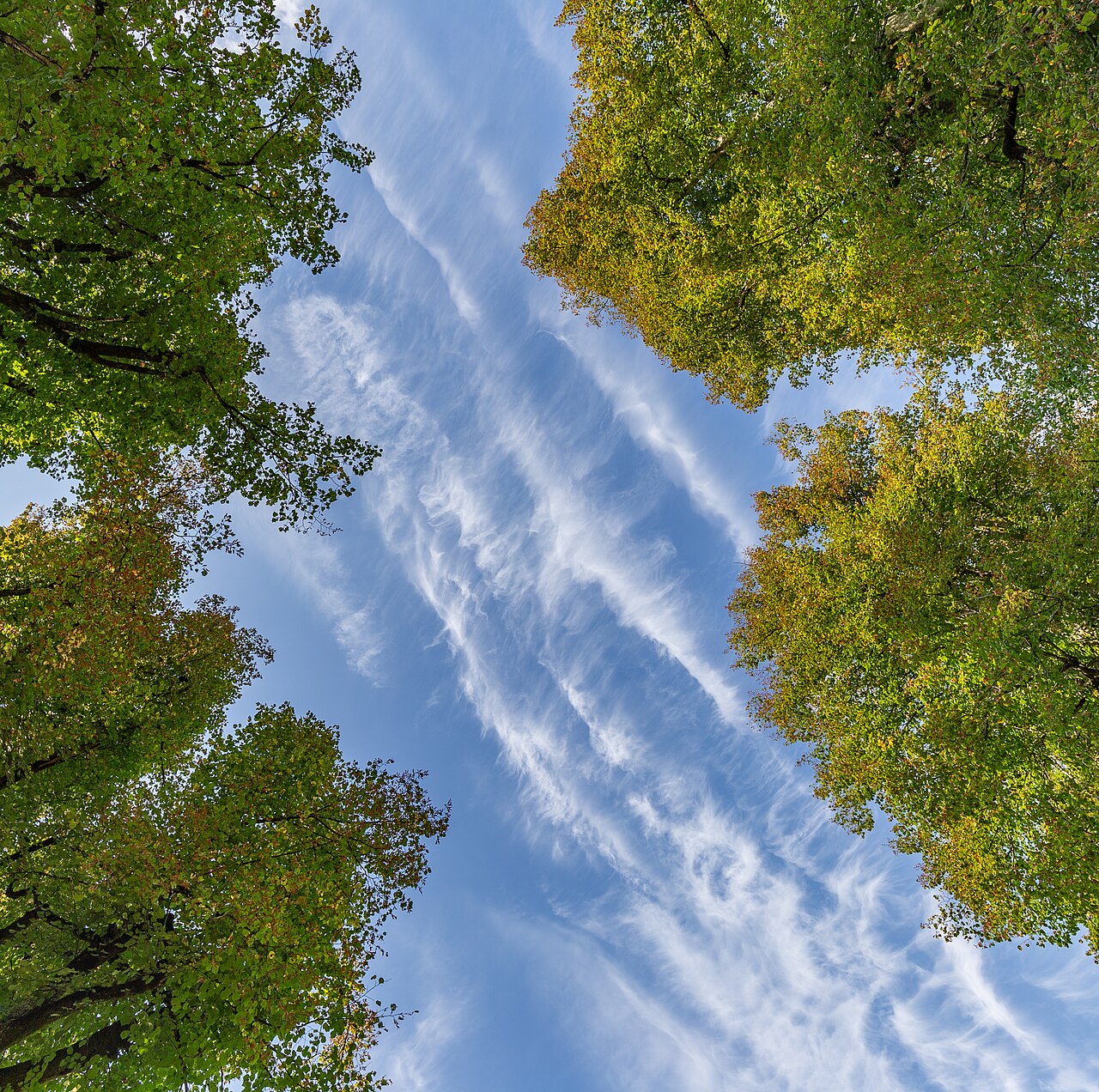
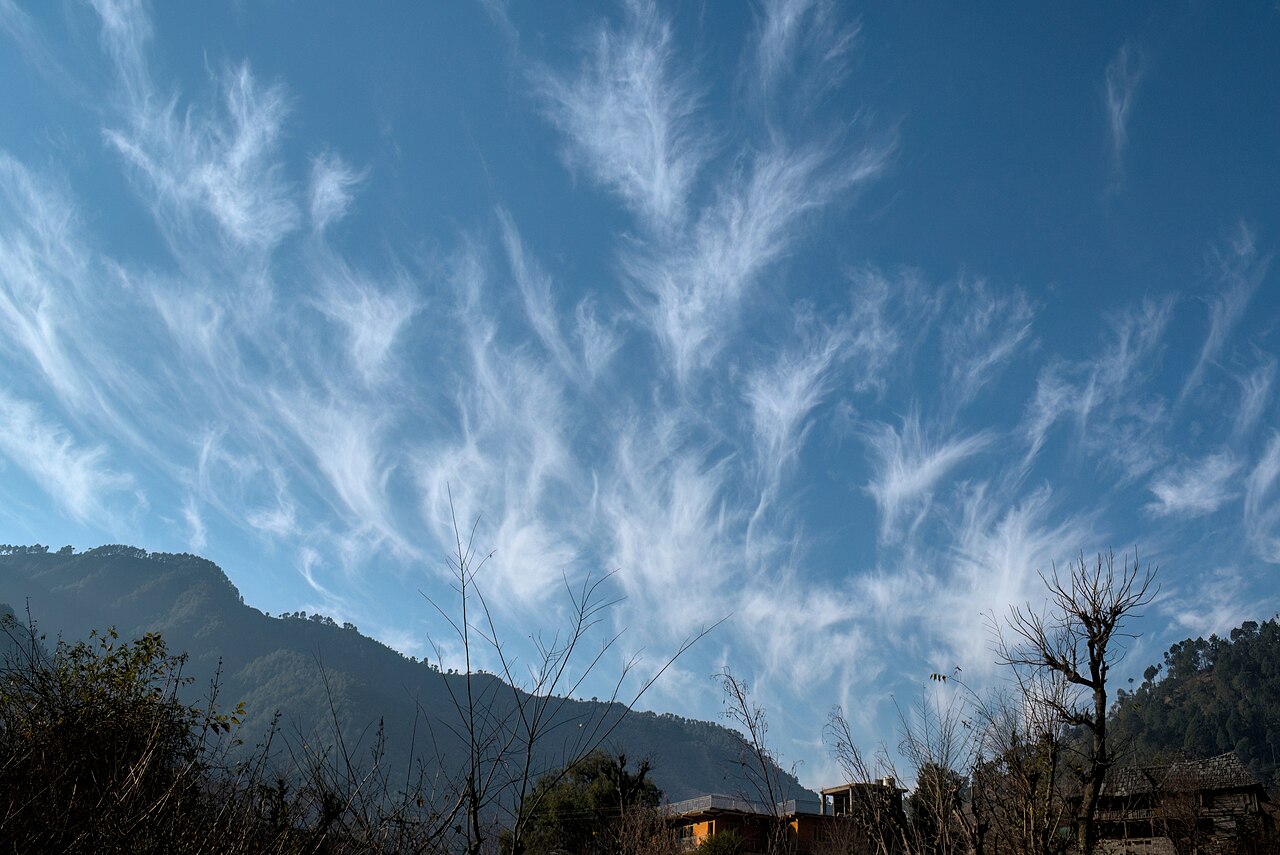
Fine white filaments, wisps or silky streaks.
How it forms
Ice crystals form in cold upper air and are shaped by winds.
Read the sky
Changes can accompany weather systems, but isolated wisps are not a forecast.
Where to look
Look high overhead where the atmosphere is cold enough for ice.
Little sky facts
Reveal fact 1
Cirrus is an ice-crystal cloud.
Reveal fact 2
It often has a fibrous appearance.
Reveal fact 3
Its strands may curve or stretch into long bands.
Reveal fact 4
A thin appearance does not mean the cloud is nearby.
Try this
Use one thin line to follow a feather of cloud.
Draw your own cloud ↗Read a little deeper
Met Office · formation and weather
Conditions described here are places to look, not a global frequency ranking. Use local weather forecasts and warnings for decisions. Never look directly at the Sun.